Project Wonderful

Showing posts with label Voting. Show all posts

Tuesday, April 4, 2017

Design the NYC I Voted Sticker!


Two things I love more than almost anything else in this world: New York City and Voting. If I had one iota of artistic ability I would be all over this contest like cream cheese on a bagel. Since I don't I am sharing it with you! Please enter and share widely!

Saturday, October 29, 2016

Your Daily Cry

Sometimes it's easy to feel like we live in a cold, dark world where people don't care about voting, when you are begging and they don't seem to understand what's at stake or how hard people have fought for that right.

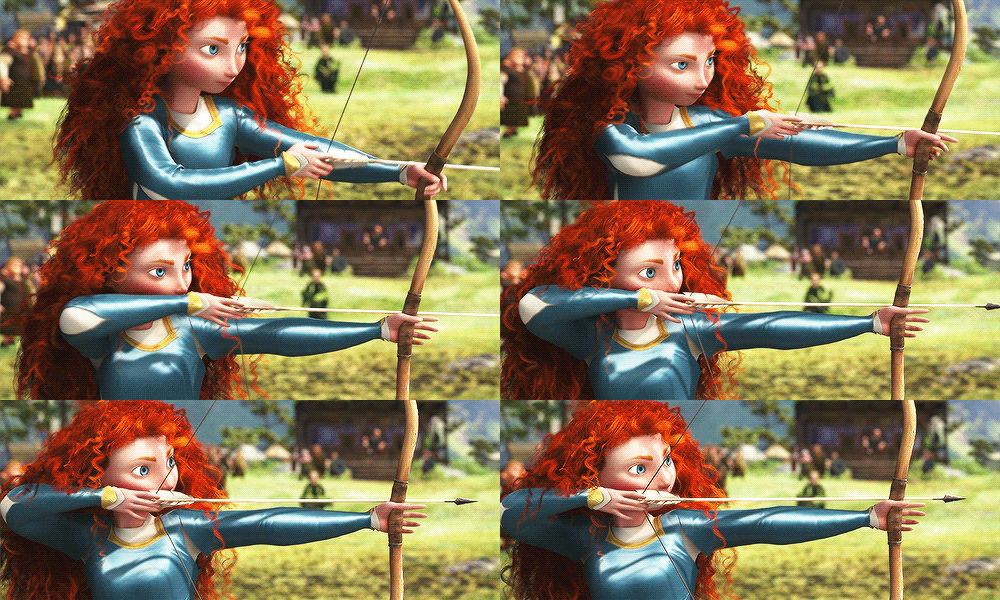
For those moments, I wanted to share two stories of people who went above and beyond to make sure their vote counted in this historic election, both of which left me in tears. (Although to be fair I cried watching Brave so...) My spirit is more than renewed to chase down my own absentee ballot on Monday.


First a man who was about to plead guilty to a felony and, realizing he might be about to lose the right to do so forever, asked the judge if he could vote first. I will save my soapbox about the vast racist conspiracy that disenfranchises felons for another time. Read his story with tissues unless you have an iron heart.


And second, well I'll just tell you the title, "The Last Thing My Mother Did Before She Died Was Vote for Hillary Clinton" and can I say hat tip to women's magazines like Glamour and Cosmo that have been covering more and more of these type of stories that affect women's lives.

Brb. Sobbing.

Campaign Love and Mine,

Nancy

Tuesday, October 18, 2016

Google Where To Vote


If you Google "Who's on my ballot" or "where to vote" you will find the above! (Don't try to find me there, I used the address of my childhood home as an example.) Kind of hard to believe that this is new, but I am all about anything that makes it as convenient to vote as possible. A little disappointed that they don't know my polling place yet though...

From there article on USAToday where I heard about this:

"We are committed to giving people timely and comprehensive information about the voting process so they can better participate in the election and have their voices heard in November," said Jacob Schonberg, a product manager on Google's politics and elections team.

Google is responding to popular demand. Search interest for "who is on my ballot" is up 137% compared to this point in 2012, while "where is my polling place" is up 379% and "polling place" is up 216%.

Keep on voting in the free world,


Nancy

Saturday, July 19, 2014

Yes! This! This Article Here!


My general feeling on ivory tower political scientists who comment on campaigns is about a 4. In my experience these individuals fall into two camps: those who are so far removed from the realities of campaign life that their work is totally misinformed or irrelevant and those who come to the right conclusions by proving things so obvious one wonders why they need to be investigated at all.

Once in a while however, this type of investigation proves useful if only because it serves as a great big "I told you so" to field program skeptics. For this reason, I was thrilled to read a Washington Post synopsis of "Mobilizing Inclusion, Transforming the Electorate through Get-Out-the-Vote Campaigns" by professors Lisa GarcĂ­a Bedolla and Melissa R. Michelson (who, I'm just pointing out, are women). Let's get to it.

Michelson asserts that "What really mobilizes these voters is repeated personal contacting." (Can I get an amen in here?!?!) She goes on to describe her research which included,

"268 get-out-the-vote field experiments conducted repeatedly across six electoral cycles from 2006 to 2008. These field experiments were focused on communities with a history of low participation and were conducted in partnership with non-partisan community-based organizations...

Our analysis shows that citizens who haven’t voted much in the past can be inspired by either door-to-door visits or live phone calls. Tellingly, our research shows that such contacts, especially if repeated, can produce habitual voters. Phone banks from which callers contact the same potential voters twice are especially effective in creating committed voters. Door-to-door campaigns also showed strong results, with one such effort increasing voter turnout by more than 40 percentage points. (To be sure, most get-out-the-vote campaigns produce smaller gains.)..

"Personal contact to encourage voting can be enough to cause many low-income minority people to see themselves anew, as the sorts of people who regularly go to the polls on Election Day. In turn, voting even once can become habit forming, reinforcing self-identification as “a voter” long after the initial conversation with a canvasser. What is more, voter contacts have strong spillover effects within households, boosting participation by others as much as 60 percent."

I can't wait to read this book!

Campaign Love and Mine,

Nancy

Wednesday, October 17, 2012

Kvelling!!!!


These are the things that make me cry friends. Priceless.

Friday, September 28, 2012

Wake the Fuck Up!!


If you haven't seen this, good because that means I am not the last one, but you need to watch this right now then you need to share it with all your friends. Not only is it clever and hilarious but it so accurately captures the problem with voter apathy this season. Do people not see that this election is actually more important than the last one? And yes, fellow nerds, I mean 2008 not like last week or 2010.

So this is amazing and it is sponsored by the Jewish Education and Research Council, which also brought us The Great Schlep and Sarah Silverman's latest Voter ID piece. Can't think of two groups I am prouder to be a part of. I'm kvelling!!!

Website Here.
Safe for Work version here.

Thursday, September 20, 2012

Super Easy Voter Registration/Absentee Ballot Request Tool!


Click here to be redirected to the Turbovote website.

So easy in fact that I nearly requested an absentee ballot by accident while playing around with it. That's right, I GET TO VOTE IN PERSON IN MY HOME STATE IN THE GENERAL ELECTION. Pass it on!

Sunday, September 16, 2012

Taking Back Religion: I Don't Swim in Your Toilet, Please Don't Jew in My Job.


Tonight at sundown begins "Days of Awe," one of the holiest times in the Jewish calendar. This is a time when Jews look back on the year behind us and forward to the year ahead, atone for our sins and ask God to inscribe us in the Book of Life. For me, as with everything else, it's impossible to separate these events from the election cycle, since I tend to imbue campaigns with an almost spiritual significance anyway. Coincidence that the High Holidays coincide with the final push toward GOTV? Debatable. That said, I want to make an impassioned plea for my rabbi to leave the election out of his sermon this holiday season.

One either under or over reported aspect of the Democratic National Convention (depending on where you get your news) was President Obama's insistence on including God in the Democratic platform. Glossing over my feelings on that as a politico (Anti! What is this, the McCarthy era? There's this little thing called separation of church and state! And what we just do stuff because the right wing dares us to now?) and my feelings on including Jerusalem as the capital of Israel (Pro! Either we recognize a government as legitimate or we don't. Plus Democrats do need the Jewish vote.) I was offended as a religious person. Who are you to assume we have the same concept of God? And who are you to use the Creator of the Universe to score political points? Bringing the election into religion cheapens both.

Last week I went to a seminar at my synagogue to get edJEWcated about the upcoming holidays. The presenter went on a long metaphor about how God is like Barack Obama and we've elected him our leader and now he makes the decisions. What? No! No! No! No! No! No! First of all, I'm pretty sure we didn't elect God. If we did, we certainly wouldn't be Jewish, since we make up .2% of the world's population. (Also, we didn't choose him, he chose us. That's what makes us the Chosen People.) Setting aside my religions beliefs, what really upsets me is that this metaphor absolves us of responsibility in our own government. To pretend that our relationship with our elected officials is one of absolute authority, rather than accountability is antithetical to our democracy. If our leaders have supreme power, then why do we vote? Or even if we vote, why do we engage after the election? Jewish text makes it clear that we have a responsibility to participate in the election regardless of how we vote.

Last year at Rosh Hashana services, the rabbi used our divided Congress as an example of the bickering and fray we should stay above in the upcoming year. I was LIVID. I don't want my religious leaders promoting political apathy! I don't need the rabbi at the one place I go to not think about elections using the sentiment that is the bane of my professional existence to get cheap laughs. I couldn't enjoy the rest of the service. Temple is the one place where I know I can go to concentrate on myself and my emotional well being. When you invoke elections, I feel like I have to be "on."

That brings me to another point. Religious leaders should not use modern political metaphors because they so often get it wrong. At the pre-holiday seminar I attended, the rabbinic fellow leading the conversation said the sentence ,"Let's say God gets 271 votes in the electoral college." My companion must have been relieved that I had lost my voice earlier that week because it kept me from shouting "270! He would only need 270!" It was distracting and it made it hard for me to take the rest of what he was saying seriously.

I realize I may be an anomaly, but for me elections just as much as religion are intensely personal, spiritual, and at the very core of who I am. When you blend the two together in a (no pun intended) unholy marriage, it's almost as if you're robbing me of the right to define myself. Telling me how elections work in synagogue is just as offensive as telling me how God works at the DNC. To borrow a phrase from VEEP, using political metaphors in your sermon is like trying to use a croissant as a dildo: It doesn't work and it makes a big mess. So here's the deal: You don't talk about the election at High Holiday services and I won't kick off a canvass from the bima.

L'Shana Tova,
Nancy


Monday, September 3, 2012

Back to School and Arrow's Impossibility Theorem


School starts tomorrow, and (hold your applause) I have already done my reading for the week! Basically all the courses I am taking are voting and elections related (hooray!) which makes me more excited to start the semester than I otherwise would be. In doing my reading I was reminded of one of my favorite lessons from last year, Arrow's Impossibility Theorem, and I thought I would share it with you!

Arrow's Theorem basically points out that aggregate voter preferences should be transitive, but they are not. Consider this scenario. We have three voters and three candidates, Barack Obama, Mitt Romney and a chair. The voters prefer the candidates in the following order:

Voter 1: Obama>Romney>Chair
Voter 2: Chair>Obama>Romney
Voter 3: Romney>Chair>Obama


Individual voter preferences are transitive, meaning that if I would rather vote for Obama than Romney and would rather vote for Romney than a chair, then I would rather vote for Obama than a chair as well.

If the chair were not running, Obama would win since 2/3 of the voters prefer Obama to Romney. Similarly if Obama were to get fed up and drop out ,Romney would win since 2/3 of the voters prefer Romney to chair. Since Obama beats Romney and Romney beats chair, it stands to reason that Obama could beat a chair as well, but not so! If Romney were to drop out, the chair would win since 2/3 of the voters prefer the chair to Obama.

Arrow's Theorem is used by proponents of alternative voting systems (for example those where voters weight their preferences) to show that no rank order or majority voting system can accurately reflect the "will of the people."

Friday, August 24, 2012

Nobody for President


"A quirky Nevada law that Republicans feared could siphon votes from a disgruntled electorate and sway the outcome of close presidential and U.S. Senate races in the state was struck down Wednesday by a federal judge.

U.S. District Judge Robert Jones said the state’s decades-old ballot alternative of “none of the above” was unconstitutional because votes for “none” don’t count in the final tallies that determine winners."


I know, I know, it's not cool for me to be on board with this decision because it helps the Republicans, but I can't help but think that there should not be a choice on the ballot, that if it gains the majority of the votes, however unlikely that is, cannot serve in the position. Of course voters should have an alternative to the two major parties, but that's what third parties are for. In an election, you vote for your best option...hopefully you're voting for rather than against somebody. Diehard Democrat that I am, I would rather see Mitt Romney in the White House than literally not have a President. I have a feeling would-be "none" voters feel the same. No doubt this lawsuit was motivated by partisan politics. There are a lot of states in which Republicans have waged war on voting rights and I find it despicable, but if we lose this election because people couldn't vote "none" in Nevada, we've already lost it.

Saturday, May 5, 2012

Ask An Election Nerd: How Do I Know Who To Vote For?

If you've been disappointed that I haven't written a long blog post in a while, (horribly bad impression of a mafia accent) I got your long blog post right here! Seriously, I almost considered footnoting this thing. Below is a question that was submitted through my tumblr a while ago. I've gotten a couple of these, so I've decided to start an Ask An Election Nerd segment to my blog. If you would like to submit a question, email me at campaignsick@gmail.com, or message me through tumblr. And away we go!


Dear Nancy,

I found your blog because a friend sent me a link to your Ryan Gossling Tumblr.

I am a 20something living in the Midwest in an important state in the world of elections—Ohio. I know people say my vote matters, but I don't know how to sort out who to vote for. Sometimes, I feel like my vote won't matter and that I shouldn't even vote if I don't put in the time to really vet the candidates, which seems nearly impossible.

I just need someone to lay it all out for me and build my confidence in my own personal voting process. Voting is a personal process right? Then why do I feel so crowded? I know I can't be the only one who feels this way. I want to do my civic duty to the best of my ability, I just don't know how.

Signed,
Nikki

Of all the reasons that someone would choose not to vote, this is the easiest for me to understand. When it comes to politics, truth is often in the eye of the beholder. There is a lot of information out there and I use the term "information" loosely. Campaigns, independent expenditures, and any pundit with a microphone are more than happy to tell you the truth as they see it, but even among the best intentioned (and I'm not implying that any of those groups are) there is room for reasonable debate. One thing I do not suggest is taking one of those "who should I vote for" quizzes online like this one, because you never know is behind them.(That may be a perfectly legitimate group, I just don't advise doing so as practice.) By simply choosing which stories to report news outlets are guilty of employing bias, plus there are candidate debates, rumors, gossip, advertising, forwarded emails from opinionated relatives...it is really difficult to know what to believe.

Before we talk about how to choose a candidate, let's briefly discuss why it's important to vote even if you're confused. To begin with, whether we realize it or not, politics affects every one of us. When I was a field organizer I was unfailingly blown away by community members who told me they weren't going to vote because they weren't "political." You mean to tell me you're a doctor and you have no opinion on health care? You're a teacher and you don't care about education? You're religious and you don't care what happens to poor people? You're a woman (or related to one) and you have nothing to say about birth control? I'm not buying it.

Also, and cue the John Philip Sousa music, voting is a big part of what makes this country great. We were the first democracy to work in modern times and since then, the concept has pretty much flourished. Sure it's imperfect, but as Winston Churchill famously said, "Democracy is the worst form of government...except for all the others." Democracy keeps us safe, free from tyranny and exploitation, and able to advance better than any other system and it doesn't work unless people vote. (Churchill also said "the best argument against democracy is a five minute conversation with the average voter," but that's why we're here.) It's no coincidence that people have died for that very right. I'm not just talking about the Founding Fathers here, I'm including very real and recent examples in the Middle East and Africa. NB: When I talk about voting, I mean in free and fair elections, not ones rigged by a dictator.

So voting, important, got it, you're on board. On to how to choose. The good news is that because there's so much conflicting information, it's okay to pick and choose your sources. It's okay to discount some factors that other people might find important. Maybe you don't care that your candidate has cheated on her husband or about her record on the environment because you like what she has to say about debt reduction. It's also okay to choose someone who doesn't agree with you on everything. The only way to find someone who is lock step with you 100% on every issue is to run for office yourself. It's about finding a candidate who you feel best represents your values.

Below is a list of information narrowing techniques to help make the task of picking a candidate a little more manageable. Some work better for primaries, some for general elections and most can be used in concert with one another. Feel free to pick and choose and don't let the perfect (i.e. knowing EVERYTHING about your candidate which is nearly impossible) be the enemy of the good.

1) Go with your gut. My empirical experience has been, and I'm sure there's research to bear this out, that people usually pick a candidate based on their gut reaction and then come up with reasons to justify their decision later on. Most people have gotten so good at doing this, they don't even realize what they're doing. They'll rattle off a list of reasons why they support Newt Gingrich over Rick Santorum with great sincerity, never acknowledging even to themselves that they got these talking points from emails or discussion boards or NPR after they knew who they were supporting. As an operative this can be maddening. However, we have gut instincts for an evolutionary reason, because they work. As a field organizer, I was infuriated when people told me they weren't supporting John Edwards because 'they just didn't trust him,' but in the end that turned out to be... prescient. Watch a primary debate and the candidates are pretty similar on the issues, though they express themselves differently. Listen to your gut. Who do you trust? Who do you want answering the proverbial red phone at 2am? If you like a candidate and she makes you feel good about spending your vote on her, there's nothing wrong with that, as long as you're up front about it.

2)Call a lifeline. If I have a toothache, I call one of my two good friends who are dentists (or as I call them friendtists.) If I have a legal question (read as: I have been watching Boston Legal), I gchat my sorority sister who is an attorney. I love it when my friends call me for advice about whom to support and I don't think any less of them. This just happens to be my wheelhouse. There is nothing wrong with using a trusted proxy to help you make a decision. On my first campaign in Minnesota, I called my State Senator's campaign manager from the voting booth to ask her whom to support in a school board primary. Even though I didn't know the candidates, I knew my colleague would tell me to support someone who agreed with her boss, who I knew I agreed with on education. If you have a friend who is more politically engaged than you, why not ask her? This strategy may sound simplistic, but if you think about it, why trust a pundit whose motives you cannot be entirely sure of over someone who you personally know and trust? We tend to spend time with people who share our values and who knows us better than our friends?

3)Be a single (or double or triple) issue voter. You will never agree with a candidate on everything, so it's important to prioritize. Even experienced campaign operatives and so called Yellow Dog (as in I would vote for a Golden Retriever before a Republican) Democrats have a litmus test. For instance, I won't work for a candidate who is anti-equal marriage, anti-choice or supports repealing healthcare. I care deeply about other issues, but before I even consider voting for someone, I find out where she stands on those three. If you're a small business owner, you might want to do some research on how the Presidential candidates' economic plans would affect your business. Maybe you also care deeply about the environment. You may want to find out if any of the candidates are endorsed by The Sierra Club or the League of Conservation Voters both of which support candidates based on their stance on environmental issues. Deciding how to vote based on one or two issues doesn't mean you don't care about others, it means that you're voting in line with your own priorities.

4)Party Down. There is a lot of legitimate criticism of our two party system. It certainly creates some strange bedfellows. For example, why does it follow that someone who is anti-choice must also be against government intervention? But the system exists for a reason. If I walked into a voting booth right now and saw two previously unknown candidates, one with a (D) and one with and (R) next to her name, I would vote for the Democrat without a moment's hesitation. I know that the average Democrat is much more likely to agree with me on any given issue than the average Republican, within a margin of error of plus or minus Ed Koch and Joe Lieberman. Even if this particular Democrat disagrees with me on something I care about, on a federal level I know that she is going to caucus with the Democrats and thus help push through at least some legislation that I support, as opposed to a Republican who might help block something, even if she agrees with me, because of pressure from political leadership. (This happens in both parties, although the Republicans are notoriously good at "keeping their people in line.")

5)Identity politics. Just ask my slightly racist grandfather, people tend to vote for people who look like them. Or better yet, check out New York City's voting history. On the one hand, I don't advocate using your race, gender or sexual orientation as the primary means of choosing a candidate (particularly if you're a straight white dude) on the other hand, broadly speaking, people do tend to share values with people who share their culture and minorities are far from adequately represented in our legislatures. Did you know that 17% of Congresspeople are female despite the fact that women make up more than half of our country's voters? Hardly representative for a representative democracy. For this reason alone, all other things being equal, I tend to vote with my vagina (although more difficult since they got rid of the levers on voting machines). But seriously folks, regardless of the issues, there are some very legitimate reasons to vote simply to get more sexual, racial, religious minorities and women into office. The next generation will not aspire to be leaders unless they see people they can relate to in leadership positions. We don't want to send black children the message, "you can be anything you want, it's just reeeeallly unlikely." Finally, the more of any group that is in a governing body, the less their participation is treated as tokenism and their disagreements are seen as discord and the more they can simply legislate.


That my friend, is what you get for asking a good question, a really, really long answer. In conclusion, keep writing to me! I love answering these kind of questions and I hope I answered that one well. Kudos to you, Nikki! The fact that you are curious, pro-active and taking your vote seriously puts you miles above most of the voting population.

Until next time,
Nancy

*Don't Forget! If you would like to submit a question, email campaignsick@gmail.com or message me through my tumblr.

Thursday, January 5, 2012

Men Are So Unstable


We all know (or should) that women make up a greater percentage of the voting population than men. But did you also know that women's votes are less volatile?

"Paul Kellstedt, a political scientist at Texas A&M University, found that if women move just a little bit to the right or left, men will move many more percentage points."

Check it out here!

Wednesday, September 28, 2011

2012 E-Voting Machines are Super-hackable

Voting machines used by as many as a quarter of American voters heading to the polls in 2012 can be hacked with just $10.50 in parts and an 8th grade science education, according to computer science and security experts at the Vulnerability Assessment Team at Argonne National Laboratory in Illinois says Salon.com


I found the video pretty boring, but if you're the "take it apart and see for myself" type, you might find it appealing.

In case you don't want to watch the boring video or read the less boring article, let me break it down for you. They are not talking about cyber attacks, although they imply those are possible as well. They are talking about physical attacks on the machine, basically rewiring it to run by remote control, which they call a "man in the middle" attack. That is in a way scarier, because you don't need highly specialized knowledge to pull it off. Apparently it's pretty easy (they keep referring to being able to do it with an 8th grade education, but I must have skipped that day) and very cheap and if it happened, there would be no physical evidence to arouse suspicion.
Test team member, John Warner explains, "The really nice thing about this attack, the man-in-the-middle, is that there's no soldering or destruction of the circuit board of any kind. You can remove this attack and leave no forensic evidence that we've been there...Gaining access to the inside of the Diebold [that's the brand of voting machine] touch-screen is as simple as picking the rudimentary lock, or using a standard hotel minibar key, as all of the machines use the same easily copied key, available at most office supply stores."
This is why I tell people it will be years before we have national at home ivoting. We can't guarantee security when we have the physical machines.

Now granted, we assume that the machines will be stored in a place with trustworthy personnel (...or you know, underpaid disgruntled board of elections workers). And more reasonably we realize that for this type of hack to have any sort of widespread effect, there would have to be a national or statewide conspiracy to physically tamper with machines. Sure one super corrupt County Party Chair might be able to rig an election (a problem in and of itself), but I would put it past even the least scrupulous of national parities to be able to pull off that kind of coordinated attack. You would really need cyber hacking for that. (I mean what? I was home all evening! I want an attorney!) Still, when it comes to the integrity of our voting systems are we really okay with "it's probably fine?"

So, while I don't find it overly concerning, I do find it dumb that we made voting machines that a zealous intern could hack into. So does the team at Argonne National. Team leader Roger Johnston explains:
"The machines themselves need to be designed better, with the idea that people may be trying to get into them. If you're just thinking about the fact that someone can try to get in, you can design the seals better, for example. Don't do things like use a standard blank key for every machine. Spend an extra four bucks and get a better lock. You don't have to have state of the art security, but you can do some things where it takes at least a little bit of skill to get in."
Why don't Republicans focus on this if they're so concerned about election fraud?

Tuesday, September 27, 2011

Fusion Voting: I've been meaning to talk to you about that.


Start this video at 1:32

Did you know that New York has Fusion Voting? Okay, back up. Do you know what Fusion Voting is? It's cool. I didn't either until I applied for a job with The Working Families Party in 2009. I've been meaning to write about Fusion Voting (also called Electoral Fusion) since I started this blog. Talking with colleagues this week about the rules we create when setting up electoral systems resparked my interest.

Here's how it works: WFP, or another third party, endorses a candidate already in the race. For WFP it is usually, but not always, a Democrat. Voters can vote for the candidate on either the Democratic or the Working Families Party line, and the votes for the candidate from both lines are tallied together. For example, if candidate X receives 30% of the total votes cast on the Democratic Party line and 20% of the total votes on the WFP line, while candidate Y receives 45% of the total votes on the Republican line, candidate X still wins!

In a country where we have first past the post, as opposed to party list proportional representation, critics argue that Fusion Voting doesn't make much of a difference. Voters who would have voted for the candidate on one line vote for her on the other, but ultimately the result is the same. But Fusion Voting allows voters to voice discontent with the two big political parties without "spoiling" the election ala Ralph Nader in 2000. It also allows a party like WFP to put its resources (particularly its spectacular paid canvass) behind candidates that actually have a chance of winning. Because WFP does not endorse in every election, a WFP endorsement does hold some weight in and of itself, signifying to educated voters that the endorsed candidate is someone who will take working class issues seriously. At the same time it holds elected officials accountable to these voters and their interests. A large percentage of the winner's vote on the WFP line sends the message "you were elected to fight for minimum wage, health care, affordable housing, etc and you better do it or next time you may not be so lucky."

Watch the video from 1:32 to 4:52 for a great explanation of Fusion Voting as well as the reason it is now only legal in 8 states (hint: special interests). Fusion Voting does not solve all the problems inherit in our electoral system, but it does ameliorate some. I think most Americans who pay attention would agree that we've created a system so entangled in special interests and money that it's hard to see how to pull ourselves up out the rabbit hole. So while Fusion Voting might not solve everything, at this point in our electoral history, are we in a position to turn a good idea down?


Monday, September 12, 2011

Never Forget.


One of my professors told the following story in class today:

He was consulting on a city council race in NYC in the Battery Park area. Primaries in NYC are this time of year so he was down there doing some GOTV. Suddenly, he saw a plane crash into his base's biggest polling place, aka the World Trade Center. So what did he do? Run? Call 911? Call his wife to let her know he was okay? Nope. He called the Board of Elections to make sure his constituents would still be able to vote. (The guy at the BOE was unaware of the crash and told him he would have to call him back.)

The story was sad and funny and definitely something I could imagine one of my colleagues doing. One of the worst (and sometimes best) aspects of campaigning is its all consuming nature. We become so obsessed with an election that we forget why that election matters, what it represents and the underlying ideals that we are fighting for. Yes, elections are important, but they're important because (we hope) they bring forward the best people and ideas. Elections are a mechanism by which we can indirectly control our quality of life, but they are not life itself...a reminder I think we could all use sometimes.

Wednesday, September 7, 2011

I hope they used Election Protection


Does anyone remember Votergasm? It was the group that tried to increase voter turnout during the 2004 Presidential election by having participants sign a pledge to have sex with a voter on election night and abstain from sex with non-voters. I recently read an article that reminded me about it and began clicking around on their (partially defunct but worth the effort) website. I high recommend the NSFW "action pictorials" especially the ones on absentee voting and starting an issue advocacy group.

Sexy voting!
-Nancy

Saturday, August 20, 2011

To D or Not to D...


It will come as no surprise to anyone who knows me that I googled how to register to vote in New York City within 48 hours of moving into my apartment. 28 days and I'm fillin' out my registration form! As excited as I am to register in my new home, I'm facing a bit of a dilemma: should I register as a Democrat or a Republican? Don't get me wrong, I'm a Democrat. I would vote for all of my-exboyfriends-riding-a chicken-that-looks-like-John-Edwards-to-improvised-live-music-played-by-Georgia-O'Keefe-at-Urban-Outfitters* before I would vote for Michele Bachmann. But that's all the more reason to put myself in a position to vote against her in the primary, right?

Let's break it down. Here are the reasons I would register as a Democrat:

1) Because I am one. I have this annoying thing with integrity. Technically speaking, I believe you should vote in primary of the party to which you belong. I thought it was a little shady in 2008 when conservatives registered as Democrats so that they could keep Hillary Clinton out of the picture. At the same time, one of the reasons I believe Democrats lose is because they are less willing to fight dirty than Republicans, so I think my desire for that not to be the case may trump any moral qualms I would have had. Maybe all liberals should register as Republicans and write-in Mike Gravel in the 2012 primaries?

2) People will know. Non-political friends are often shocked and appalled to learn how easy it is to find out information about someone's voting history. The party in which you are registered and in many cases whether or not you voted in a particular election are but a few mouse clicks away. (Fear not. This doesn't mean I can find out how you voted, just how you were registered.) Much in the way I laugh in the face of danger, I also laugh in the face of anyone who suggests I might like to run for office, but who knows what twists and turns might bring me into the public eye? I don't want my youthful fancies creating a PR problem for candidates or organizations I work with in the future. Besides I might become severely campaignsick and decide I want to become involved with the local Democratic committee for which, one must usually be a Democrat.

3) In NY, sometimes primaries are the ballgame. Did I mention that my new Congressperson is Charlie Rangel? New Yorkers have a tendency to be brand-loyal to Democrats. (I know, call the papers! Our secret is out! We're a bunch of freedom-hating-gay-kissers over here.) Although this is NOT an excuse not to vote in the general, it does mean that to have a greater say in who represents me, I will need to vote in the Democratic primary. True, registering as a Republican would allow me to vote in the 2012 Presidential primary, but my local politicians will have a greater impact on my daily life than whomever we choose as the Republican nominee, especially because if we do our job right that person will lose.

So why would I register as a Republican?


1) I want to vote against Michele Bachmann. Remember that weird list of things I said I would vote for over her? *That is a list of almost everything I hate combined into one giant super-awful. Granted, I am not a fan of Mitt Romney or any of the other gay-hating, poor-ignoring, religion-manipulating liars running for the Republican nomination, but Michele Bachmann is a special kind of monster: the kind that makes me makes me think "well this is why women shouldn't be in politics." Michele Bachmann's husband is a (clearly gay) pray the gay away counselor. She has probably never befriended a Jewish person in her life and yet she accuses President Obama of having too much "chootspa." She doesn't know who the founding fathers were. She lies about global warming. She believes women should be "submissive" to their husbands. And not even in the sexy way! Do other Republican candidates hold the same views? Of course they do. I can't stand them either, but Michele "Words mean whatever I want them to" Bachmann is the only woman in the race. Michele Bachmann becoming the first woman to secure her party's nomination would be like Carrot Top becoming the President of funny redheads. She makes women look like idiots. Those are my people you're pretending to represent and I simply can't have that happen. I don't think she'll get the nomination and I don't think she'd win if she did, but I'm not willing to take the chance.

2) I'm a big elections nerd. (WHAT? I know, I'm dropping all kinds of news worthy shocktails in this blog post.) I want the phone calls. I want the glossy lit telling me how the other candidates want to tax my money and abort my baby. I love that. I live for that, and I'm really looking forward to enjoying the primaries as an interested disinterested party not drunk on John Edwards' placenta tainted Kool-aid. And for you, my adoring public, wouldn't it be interesting if I had a bevy of Democratic campaign operatives and crew helping me decide how to cast my vote in the Republican primary?

3) Really, why not? Rino, Dino, who's to say what makes a Democrat or a Republican? When does a cello student become a cellist? When she starts calling herself one. In response to my own argument that I should vote in the primary of the party with which I identify, who's to say I wouldn't be? I don't support every Democrat and I don't hate every Republican. In fact, I wish I supported more Republicans. Choosing between two ethical, qualified candidates in a general election rather than supporting the lesser of two evils is basically the electoral holy grail. Clearly the Republican party is not churning out candidates to my specifications, but maybe if better people voted in their primaries they would and in turn Democrats would have to produce even more compelling candidates to keep up.

So what do we think? Is New York City Nancy a Democrat or Republican? Vote! Let your voice be heard! (poll in the upper right corner of the page)