Sunday, October 21, 2018
Healing Justice and Surviving Elections With Kate Werning
I spend a lot of my time thinking about campaign culture (duh). What makes it magical, what makes it difficult and how can we make it easier to sustain? So I was thrilled when Kate Werning reached out to me about her podcast Healing Justice and specifically her mini-series on Surviving Elections. After listening to earlier episodes, I felt completely intimidated and also a little defensive. After all, the goals and the intentionality behind movement work are just not possible in the same way when you have an impending deadline. Lucky for me that's what this mini-series is about!
Since Kate interviewed me, I figured turnabout is fair play and wanted to share more about her and her extraordinary project below. To listen to the mini-series (not just because of me but it's SO GOOD) click here.
Who are you? Tell us a little bit about yourself.
I’m a Midwesterner, a community organizer and trainer, and a yoga and healing practitioner. I’ve got 10 years in the game working with social movements, raised by the brilliance of the Dreamer & immigrant rights movement, the Wisconsin Uprising, get out the vote efforts to defeat Paul Ryan, and learnings from holding trainings for leaders working on climate justice, Movement for Black Lives, student organizing, worker rights, and more. I co-founded a collective house in Brooklyn called Hoop House, and am a total grandma about hot epsom salt baths. They cure everything.
What is Healing Justice Podcast?
I started Healing Justice Podcast because on November 9, 2016, the accumulated overwhelm of what we’re facing as a nation hit me with a weight that seemed to both speed up time and also freeze me in place. I am so grateful to have access to peers and teachers who help me find the emotional capacity and strategic options to move forward in times like these -- but so many of us don’t have access to mentors like that. So, I decided to share those conversations.
Healing Justice Podcast is democratizing access to perspectives and practices to integrate longer term vision, healing, and sustainability into our organizing work. It’s supporting us to stay the course to win, and also not lose love for our own lives in the process. We’ve shared the voices of over 80 guests with 70+ episodes in our first year, and the numbers show a deep hunger for this conversation right now: we’ve hit 500,000 downloads and landed in the top 7% of podcasts. Our people need this work.
What inspired you to do the “Surviving Elections” mini-series?
My relationship to elections is a fraught one. 2008 was the first presidential election I could cast my vote in, believing wholeheartedly in the change Obama promised. Under Obama we won DACA and other important advances, and also saw more deportations than ever before in US history. During the Wisconsin Uprising in my home state in 2011, our energized mass resistance movement get channeled into a recall election strategy that ultimately squeezed out some of the oxygen of our momentum and failed. Failed so hard that Scott Walker has now been elected, re-elected in the recall election, and re-elected again. I worked on a national campaign to mobilize wellness practitioners to vote in 2016, and again we came up short.
I just finished up working on the Organizing Team of the Cynthia Nixon campaign here in New York, and there is so much I experienced there about that campaign in particular, and electoral politics in this country in general, that was vibrantly hopeful as well as deeply discouraging. I wanted to dive deeper into those paradoxes and knew my peeps need that conversation, too.
The questions posed in our trailer for the series are exactly it: how do we grapple with the inherent compromises and contradictions elections require? Is there a way for people working on campaigns to move at a pace that is anything close to sustainable? Is there anyone who knows how to use the VAN and be a kind person? (OK, that last one is pretty unfair, but I’m not the one who said it!)
What can we expect from the series?
Through the “Surviving Elections” podcast miniseries, we’re talking to social movement organizers like Sunrise Movement about how elections can play into a movement building strategy, campaign managers (including you! yay!) about cultivating healthy campaign culture that leaves strong infrastructure behind after election day, and candidates about their experience running for office. The Campaign Workers Guild joins us to talk about the movement they’re building to organize for workers’ rights in politics, and I share a little bit about our unionization process on the Cynthia Nixon campaign.
Our final episode will be released the day after the election so we can process the results and what’s next––with young leaders of color who are shaping the current progressive wave like Alexandra Rojas of Justice Democrats, and lifelong activists like Professor Barbara Dudley who help us understand ourselves in a longer-term movement arc.
What is one thing you think “campaign people” can learn from movement work?
A longer perspective. The short time frame and pop-up nature of electoral campaigns can create a “churn and burn” culture that can leave us and our volunteers broken at the end of it. We have to be careful with each other. The campaign will end, but hopefully our relationships do not. The volunteer infrastructure, fundraising capacity, strategic alignment, and relational networks built during campaigns is such a massive precious resource -- and movements are thinking long term about how to mobilize those resources into huge collective shifts, turning tides that cannot be reversed. Campaign staff needs to be asking local leadership how the campaign can feed into their longer strategy, exercise patience and listening, and join with the local progressive vision in service of those who will remain doing the work after E-day comes and goes.
What is one thing you think “movement” people can learn from campaigns?
My movement building community (Momentum) has taught me to focus on moving public opinion to change the political weather and force politicians’ and candidates’ hands. I really believe that is the path to lasting change. Yet as I organized on the Cynthia Nixon gubernatorial campaign here in New York, I experienced the incredible power of an unapologetically progressive campaign to change the conversation, move decision-makers to the left, and energize new imagination in the progressive public. I think movement organizers need to understand electoral campaigns as actions in their own right - they have the power to galvanize and train thousands of new leaders, polarize the public, and dramatize heroes and villains for our issues. What if we related to electoral campaigns not as an ultimate solution, but as campaign cycles that can feed into our longer vision?
What surprised you working on the Cynthia Nixon campaign?
I was pleasantly surprised by the vision for the role I was invited into, which I believe is rare on a campaign. As the Hub Organizer, I worked with specific constituencies. I am most proud of what we accomplished with #DisabilityJustice4Cynthia, a group of disabled activists who gave major input into Cynthia’s disability platform, organized actions, helped fundraise, and did self-directed visibility work on Election Day.
Together we hosted a Virtual Town Hall, which was an hour-long virtual event dedicated to Q&A on Cynthia’s disability platform. We had talented Closed Captioners and ASL interpreters, and practiced the ins and outs of the tech to ensure it was as accessible as possible. Cynthia addressed the intersectional lens required to be an advocate for disability justice, and we had so many comments from people that had never in their lives heard a candidate understand the wildly varying issues faced by different folks in the disability community. People were so happy to be able to join such an accessible space and hear their concerns addressed so directly.
This surprised me because I think it is rare for a campaign as big as ours to invest that deeply in relationship and accountability to specific communities. I was so happy that the leadership saw this as a priority, and I know that through the work we did together we are leaving behind a stronger network of incredible disability justice activists who are now more connected and will undoubtedly continue to move the necessary policies that were included in our platform forward.
If there’s one thing people come away with from Healing Justice what would you want it to be?
We need you. You matter. All of the policies and visions we are fighting for… the things we so deeply believe all people deserve… you deserve them too. And if we can have rigor around remembering and practicing that belief with skill and determination, that power radiates into the work we are able to move in the world.
What’s a practice from the podcast that would be great for campaign people?
Ooh. I’d go with the Compartmentalizing in a Healthy Way practice. Having Je NaĆ© Taylor in your ear helping walk you through overwhelm, anger, emotion, whatever -- is such a clear and practical encouragement, and it’s just 11 minutes long. [Editor's note: I am so glad Kate picked this one because I've adopted it myself since listening to that episode.] This is a great one to put on in your headphones after an infuriating interaction with your supervisor, an unsettling volunteer or canvassing interaction, or if something’s coming up in your personal life but you just really need to focus at work right now.
If you’re really ready to stretch, the Relational Inclusion practice is powerful -- it is an exercise to understand where someone else is coming from when it feels totally impossible. We need this skill deeply on campaigns, where the pace can exacerbate conflict amongst ourselves getting entrenched and feeling insurmountable - I hope we aren’t too far gone to be open to it (ha!).
There are so many great ones for also getting back into our bodies, too -- Somatic Centering, Emotional Freedom Technique, and more… it’s so hard to choose!
What else do you want us to know?
I am so grateful for all the folks working on campaigns right now, on behalf of all our futures. Your labor is such a gift to all of us. Eyes on the prize -- this has been and will continue to be a long game fight. Let’s do all we can this cycle, and be good to ourselves and one another along the way. Because after November 6th, November 7th comes, and if we still have each other, then our movement can keep growing. Onward.
Join the “Surviving Elections” email list to receive a weekly email that isn’t asking you to chip in $3 before the reporting deadline! We’ll send you new podcast episodes when they drop, along with a weekly Election Survival Tip.
You can listen to Healing Justice Podcast on most podcast listening platforms. Our favorites are RadioPublic and Apple Podcasts. Talk with us on Twitter, Instagram, and Facebook.
Tuesday, August 28, 2018
Ask Nancy: How to Work Smarter Not Longer
It finally happened. I wrote the same blog post twice.
Occasionally I will post about "working smarter not longer" and sometimes I get questions about what that means. Then I do things like write an entire blog post answering that question before I remember that I already wrote this one in 2014, the inadvertent rehashing of which was not an optimal use of my time. (Bonus time management tip, make sure you haven't already done something before you go to do it.) I'm posting this new version because a) it's already written and b) it contains some new insights gained over the last four years. Enjoy!
1) Plan ahead. Everyone knows that campaigns require planning but not everyone is clear on what planning means. A plan is not “the event is on September 6th and there will be a canvass afterward.” Planning involves specific goals, “we want to turn out 100 people” and specific steps to get to those goals “to get 100 people there we need about 150 RSVPs. So for the next two weeks every night we need to make about 500 phone calls. I will need two interns to do this with me. These are the lists I will call. Here is where I will track the RSVPs. Here is the script for confirmation calls which will begin the Friday before…” You get the picture. Think through every aspect of your project and envision what it will look like. Cut it down into small pieces and start as early as possible. Most late nights in an office are spent there because someone didn’t plan ahead and winds up scrambling to complete a greater amount of work than they’d accounted for. The sooner you start working on a project the more time you have to contemplate little details that might have escaped you if you leave things to the last minute...and then you have stay up all night taking care of them. So plan your work and then work your plan.
2) Take care of your body. Exercising, eating right, drinking water and getting sleep are essentially for your overall productivity. But I’m also talking about in the moment. If you are completely exhausted at 10pm and you’ve been staring at a blank screen because you need to complete a walk script or a press release, go the heck to bed and wake up early to take care of it. If it’s 3pm and you haven’t eaten all day because you’ve been planning a rally with a big surrogate, take half an hour to get a sandwich and come back. I’m not saying to drop everything to take a nap every time you yawn or get a sandwich every time you have a craving but the truth is you don’t do your best work running on empty. It’s better to take a little time to take of yourself rather than taking an hour to complete a task that should take 15 minutes because you’re working depleted.
3) Delegate. We tell organizers to organize their way out of the job but as managers we sometimes neglect to heed our own advice. I’m not suggesting you foist the less desirable aspects of your job on your underlings but I do believe you should empower them to take on more responsibility. Often times the 13 things you “have” to get done don’t have to get done by you. However, if you don’t train and empower your staff early then you wind up being the only one on the campaign who knows how to cut turf, pull a list, or work the email program come crunch time. Or you as the Campaign Manager wind up being the one who activists and volunteers call with questions election day because you never bothered to hand off those relationships. Just like you have to spend money to make money, you have to spend time to save time. Not to mention of course that you are helping your staff become more invested and teaching them skills they will go on to use on future campaigns. Train and empower your staff, or risk some very late nights.
4) Keep a to do list. I keep two kinds of to-do lists on my desk. One is a whiteboard with ongoing projects, emails, ideas and things that need to get followed up on. The other is a daily paper list with three professional and three personal things I need to accomplish before the end of the day. Personal might say something like “Pick up dry-cleaning, pay car loan, call Grandma to thank her for birthday gift.” Professional might be, “Write press release, secure locations for photo shoot, send e-blast.” (I now also keep an ongoing to-do list on a Google doc for each person who works under me so I know what needs checking in on.) When something comes up that's not a priority for the day, rather than get sidetracked, I add it to the whiteboard and carry on with the project at hand. My day doesn’t end until I’ve accomplished all three professional (and usually personal) items on my list and I don’t start in on other projects until I’ve accomplished those three. Sometimes they take all day, sometimes I knock them all out before lunchtime but the lists help me feel productive and ensure that nothing slips through the cracks.
5) Prioritize. Do what is important, not what is most fun. It’s a very human impulse to spend more energy on what we feel like doing than on that which is not enjoyable but needs to get done. Let’s say your boss has asked you to call through county chairs and introduce yourself and you are anxious about this because you’ve heard a couple of the people you are calling are not fans of the campaign. You also have to decorate your office and spend some zen-like time cutting turf on VAN. If you put off calling the county chairs while you complete the other tasks on your plate you’re going to be grumpy all day because you will be dreading the unpleasant task. You are saving the activity that takes the most emotional energy for the point in the day when you will have the least. (By the way Campaign Managers totally know when and why you are procrastinating on the thing you don’t want to do, and we don’t love it.) On the other hand, if you start with making your phone calls and knock that task out before noon, you’ll spend the rest of your day feeling accomplished and get to do what you love about your job emotionally unfettered. If you eat dessert first, you’ll never finish your dinner.
6) Focus. I heard this amazing quote from motivational author Jen Sincero, “Urgency is the opposite of hurrying.” Urgency means you are honed in at the task at hand and you are calm and laser-focused on getting done what needs to get done because you have planned ahead (see #1). Hurrying means you are stressed out and running around like a chicken with your head cut off because you didn’t account for this situation. Work expands to fit the time in which you have to do it. So if you have a task you know will require a lot of time or energy, close the other tabs on your computer and set aside a chunk of time to do that task and that task only. Yes, phones ring and things come up but 90% of interruptions are items you can make a note of and respond to in a couple of hours. If something truly requires your immediate attention, take care of it, and then get right back to the task at hand. Nothing drives me crazy like someone complaining that they’ll be in office until midnight after having spent all day dicking around on Facebook. Do what needs to get done, calmly, completely and well.
Sunday, August 12, 2018
How To Be An Ally To Your Woman Campaign Manager
We talk a lot about why it's important to have women in seats of power when it comes to elected officials but it's just now that we're starting to talk about why we need women in roles like Chief of Staff and Campaign Manager--the power behind the power. Hat tip to this Teen Vogue article (can we talk about how Teen Vogue is slaying it these last couple years?) by Erica Sagrans. These women are setting the culture of their operations and influencing policy and priorities often more so than their candidates/elected officials.
I'm going to write more about this too coming up but I genuinely believe that men in our industry need help catching up and really understanding on a fundamental and practical level what it means to support women in our industry and for that matter women need to think critically about supporting each other. Now, I want to put out a disclaimer that by and large I love the men I work with (so much so that I married one). I really struggled with this post because I want to use specific examples and call out some behavior I have seen as a Campaign Manager but I don't want to shame anyone. When you know better you do better and I know that the smart, progressive guys in our community want to do better. So here we go.
1) Notice when there aren't women or people of color in the room. Managing my first campaign back from 3 years in DC I was shocked but not surprised by the level of just obliviousness to soft sexism that still exists on the ground on campaigns. There was one particular incident in which I was not invited to an important meeting about the future of the campaign despite being, you know, the Campaign Manager and that incident really crystalized what had been bothering me since day one. When I pointed out to the rest of the team that not only was I not included but no women from any of the groups attending the meeting had been invited, they simply hadn't noticed. This cut me even closer than the original slight. The fact that it was natural and unremarkable to my colleagues that a group of 10-15 people should be comprised entirely of men underlined a complete lack of appreciation for the challenges I face as a professional woman. So the first thing you can do is just notice. Begin to notice how often women are left out, spoken over and sidelined and you will gain a deeper understanding of why your choices and actions impact our professional relationship in ways you hadn't considered.
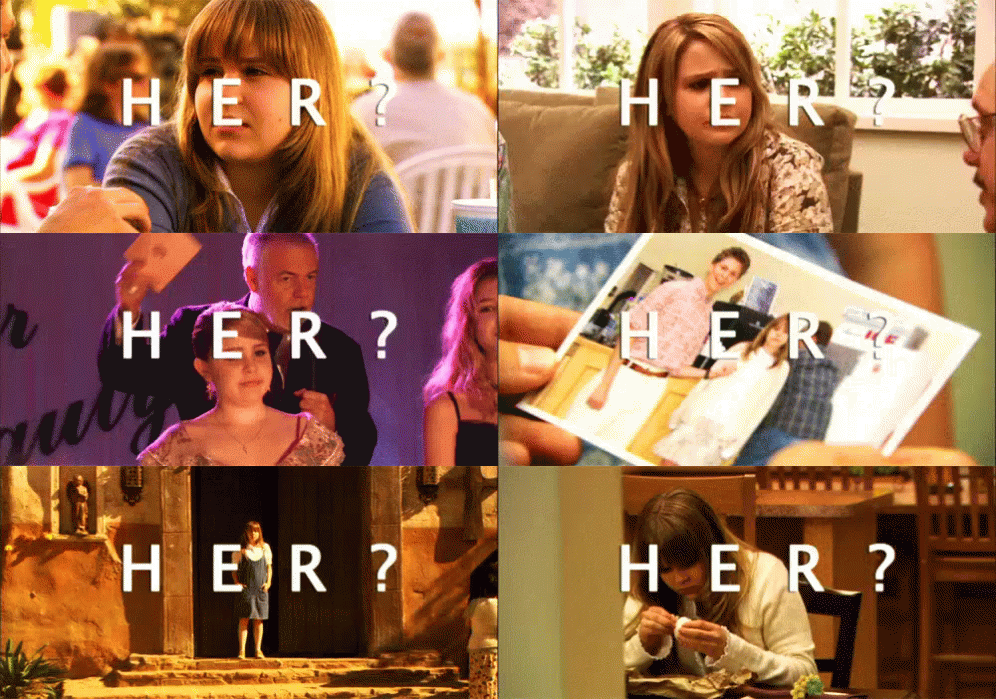
2) Bring me with you/Don't be a gatekeeper. Great, so you've noticed that women aren't invited. The next step is to invite them. No one in the progressive community (I hope) puts together any sort of conversation and thinks "let's not have any women/people of color/working class people/LGBTQ+ people etc there." What we do think is, "Who do I know? With whom am I comfortable? With whom do I already have a relationship?" And the problem is that the answer tends to be people who look and think like us. Even if it this weren't a scenario in which I should have already been invited by dint of my position (and I absolutely should have been and eventually was) it would behoove our movement in similar situations to actively seek out appropriate women to include. You may say "if a woman doesn't hold a position of power then why should I just bring one along?" To that I say, "why am I the only woman in a position important enough to (eventually) be included?" Part of the answer is that these are the rooms in which relationships are built and those relationships often put people in positions of power. So if you make an effort to insist on having a woman to the table, the next time we're asking the questions "Who do I know? With whom am I comfortable? With whom do I already have a relationship?" The answer will be "her." (No, not Egg.) Not only does diversity lead to better outcomess but it interupts a self-perpetuating cycle.
This is especially important in an industry where our currency is relationships. Sometimes we want to be the gatekeeper to powerful people or conversations because we think it makes us valuable. I would submit that preserving our privilege isn't the best way to build that currency. Instead being a connector is a wonderful way to build our personal power and improve our community. As I always say, this cycle you might be at a committee and I might be managing one of your races, but next cycle I'll be at that committee and you'll be a consultant wanting me to connect you to my races. So do what's good for you AND our community and make sure you are advocating to have women (and other traditionally marginalized people) at the table.
3) Speak respectfully, whether I'm in the room or not. I attended a gathering recently where a high-ranking official light-heartedly called someone "a pussy" then turned to me, the only woman in the room and apologized. There's a lot to unpack in that particular backpack but let's suffice it to say the following.
I have a zero tolerance policy for the word "pussy" on my campaigns and it's a policy I've had to enforce, a lot. Every time a male colleague refers to someone as a "pussy" I calmly and firmly interject, "we don't use that word on this campaign." (BTW I totally recommend adopting this.) My policy is not about cursing or even about off color jokes--I revel in both with great frequency and enthusiasm something I've had to keep an eye on as I've moved up the ranks-- but about the misogynistic root of the word itself. It's the same reason I had to side with Twitter about Samantha Bee calling Ivanka Trump a feckless cunt. I would never defend Ivanka Trump but when you use a gendered word like "cunt" or "pussy" to refer to someone in a derogatory fashion you reinforce the stereotype that women are weak or that our sexuality is dangerous. Whether you realize it or not you are essentially claiming your own power by reducing women to physical form or reproductive function. You are not insulting one woman (or man) in question, you are insulting ALL women. Moreover it is imperative that we never behave as if women's dignity and the moral high ground are at odds in zero sum game.
One joke or slip of the tongue isn't going the crumble empire but it does contribute to a toxic culture. So don't say something when I'm not there that for which you feel you'd have to apologize if I were. I love campaign people because we are smart, funny, and ambitious. Surely we can come up with some more creative curse words.
4) Don't go to strip clubs. I really wrestled over whether to include this one both because it seems so painfully obvious and because I don't want to give any ammunition to anyone who might use my words to defame Democratic campaigns. On the other hand...ayfkm?
Not too long ago, I wanted the phone number for a mid-ranking person in the Democratic infrastructure and I knew a colleague of mine had his number because that colleague had told me a story where he had lent this person money when they were at...a strip club. You know why I didn't have the guy's number? Because I sure as heck wasn't at a strip club. You see my issue here?
I don't want to give the impression that is a regular occurrence or the favored pastime of off duty operatives--if it ever was I think we've moved past that. But it happens enough that I could take my three best straight male friends in this industry and think of three separate unrelated incidents I could have used as the above example.
Look, this is not a point about the morality or feminism of strip clubs. I know there are arguments on both sides. But regardless of what side you fall on surely you can appreciate that this is not appropriate in a professional context. I know, and love, that the line between personal and professional is often blurred as we work long hours together in unfamiliar destinations. If you are at a bachelor party, gross in my opinion, but fine. If you are blowing off some steam with your new coworkers after going out on the road for GOTV...ask yourself who isn't there and why.
5) Validate my frustration. At its best working on campaigns can be absolutely exhilarating. At it's worst it can feel like having your soul slowly chipped away by an ice pick. You know what else is a lot like that? Being a woman. This work is hard. Life is hard. Being a woman is hard, especially in this industry, and especially now. I can't tell you how much means to me when I tell a male colleague a story like the ones above and they respond, without me have to prompt them, "that's not okay." By contrast of course, when male colleagues bend over backwards to deny the gendered aspects of an unpleasant work situation, it only compounds my frustration. There are a thousand little slights (some might call them "microaggressions") that come part and parcel with being a woman in a professional position of power and when we recognize them and call them out, that load gets a little lighter.
6) Understand that I'm doing this backwards in heels. The corollary to point 5 is that I'm asking you not to express your disappointment or displeasure with me when I don't handle an unfair situation the way you would or think that I should have. Please understand I've been socialized to be sensitive to the reactions my actions provoke and that those reactions are often different because I'm a woman. Where you might demand to be included in a meeting and be seen as sticking up for your candidate, I'm seen as egotistic and not being a team player. Where you might flat out reject someone's idea and be seen as decisive, I'm being a bitch. Speaking of socialization, the quiet but constant self-doubt I suffer as I struggle to balance when to push back against these norms versus when to suck it up for the sake of efficiency (even if that "efficiency" means placating egos for an extra 10 minutes in a situation where a man wouldn't have to) and the guilt and impotence I feel regardless of which path I choose is quite enough to drag me down all on their own.. Though your disappointment may be well-intentioned, please give me the benefit of the doubt that I thought of that, and keep it to yourself.
Writing this took it out of me but I have lot more to say on the subject. Shout out to all the badass men and women who make it a pleasure to do this job.
Campaign Love and Mine,
Nancy
Sunday, June 10, 2018
California's Top Two Primary Is Bad and Should Be Abolished
I'm back, babies! Well, back because I lost a primary. But that's okay. I have actually never felt so okay after losing an election first because I am so incredibly proud of the job that we did and second because I was prepared for the possibility of going right into the general election so I'm still raring to go to take back the house and take on actual Republicans (I hate primaries.)
Anyway I have been itching to write a post about the top-two primary system for a while but for obvious reasons was holding back until I was not currently at its mercy. For those of you who have not been following the political pants-peeing Twitterverse the top two "jungle" primary means that the top two vote-getters, regardless of political party, advance to the general election.
At first glance, a jungle primary seems appealing if you do not go in for the two party system. The problem is that we currently live in a dangerous political reality and not a cloud made of unicorns. It may also seems appealing if you live in a solidly red or solidly blue district where you would like to have an actual choice in the general election. Again, that would be fine if there weren't several swing districts in California that could determine the fate of the house and therefore of whether many Americans have things like visas for their family and healthcare.
Take a district like mine which has an EVEN Cook PVI. When incumbent Ed Royce was running for re-election, no problem. He would easily get the bulk of the Republican vote and advance to the general election with the top Democratic vote-getter. But when Royce announced his retirement, all hell broke loose. We had 21 candidates and 17 who ultimately filed, but let's say for the sake of simplicity there are 6 viable Democratic candidates (Bert, Ernie, Grover, Elmo, Big Bird, and Cookie Monster) and 3 Republicans (Reptar*, Rodger Klotz and Mr. Bone).
We could end up with a result like this:
Klotz-16%
Reptar-15%
Big Bird-14%
Cookie Monster-13%
Ernie-12%
Grover-11%
Mr.Bone- 9%
Elmo-8%
Bert-2%
Klotz and Reptar, both Republicans, would advance to the general election even though 60% of the electorate voted for Democrats.
How primaries should work in general is a topic of contentious debate. Should they be closed (meaning you have to be a registered Dem to vote in the Democratic primary) or should they be open (meaning anyone can vote in any party primary, thus expanding participation) or somewhere in between? But whether you argue for the former or the later this accomplishes neither goal. A top-two primary robs the Democratic electorate of choosing their nominee and weakens the power of the Democratic party. Neither does it enfranchise the broader electorate. In the example above, most voters preferred a Democrat but will now be stuck with the choice of two Republicans as their representative.
An ancillary problem is that this system favors Republicans, who are more consistent primary voters. I can't tell you how many Dem or Dem-leaning Decline to State voters I spoke with were not planning on voting the primary because they figured they would just support the Democratic nominee in the general election, not realizing if they didn't vote now they might not have that option. (This part is ultimately a problem of both turnout and voter education but I felt it was worth mentioning here.) Dedicated Democratic voters had the opposite problem of being forced to choose not their preferred candidate, nor even the candidate who they felt had the best chance of winning a general election, but the candidate who was best positioned to make it into the general election, not always the same person.
Furthermore, the jungle primary leads to poor distribution of resources. Because there is no true Democratic primary, the California Democratic Party (CDP) engages in a series of caucuses for their nomination process. The rules and especially list of participants in these caucuses are (despite the best efforts of many dedicated people on the CDP staff) byzantine and amorphous respectively, much to the frustration of anyone who has managed a primary campaign in the state. The caucus- goers are local Democratic party delegates and their alternates which means that an extremely disproportionate amount of a candidate's time in the early and even mid months of a primary is spent talking to 30 to 60 voters who may or may not represent the will of the actual electorate. It is a questionable process to say the least but it is also the only way for the state party infrastructure to exercise its power in a top-two primary system.
But it gets even more convoluted. Unlike the Minnesota caucuses, which are a whole other kettle of lutefisk, voting is not open to the general public and candidates and stakeholders do not as a rule abide by the endorsement** although state and local party leaders argue that they should. To wit, in California's 48th District the CDP endorsed Hans Kierstead and the DCCC endorsed Harley Rouda. As of writing, that race remains too close to call.
Speaking of the DCCC, the other massive waste of resources caused by the top-two primary system is the DCCC's involvement. Wounds are still fresh, but although I vehemently disagreed with and at at times felt personally victimized by the DCCC's choice to get involved in my race, I still totally get why they did it. In general, I am of the opinion that rather than invest in altering the outcome of Democratic primaries, the party should spend that money figuring out how to win general elections. However, in the case of California's top-two primary system the DCCC has not just a right, but an obligation, to ensure that at least one Democrat makes it to the general election. The result, however ham-fisted, is millions of institutional dollars spent necessarily meddling in primaries when that money could, should, and mostly likely was intended by donors to be spent fighting Republicans. One can only imagine the ill-will and distrust generated between national and local parties thanks to the jungle primary system.
So what to do? If one believes that the impetus for California's top-two primary system is to create greater choice for voters in deep red or blue districts (and not, as has been suggested to me, to create greater opportunities for lobbyists) then my suggestion is instant runoff primary voting. Under such a system, Californians would have the opportunity to express their preferences among their party's candidates without causing a general election shutout, except in cases where the majority of the electorate really did skew heavily red or blue. It's a system that, like all other electoral systems, could be gamed but would still be a marked improvement. Ranked choice voting has the added benefit of discouraging intra-party negative campaigning since you still want your opponents' supporters to put you second, but more on that another time.
There you have it. This was almost as exhausting to write as it was to live through, but I hope not so to read. What other topics do you want to see? I've got loads of opinions and a moderate amount of free time and it's great to be blogging again.
Campaign Love and Mine,
Nancy
*Yes I know Reptar was from Rugrats and the other two were from Doug. Don't @ me, bro.
** I see you, Tim Walz.
Labels:
California,
CDP,
instant runoff,
jungle primary,
primaries,
top-two
Saturday, February 24, 2018
Did Doug Jones Win Because of Yard Signs? CampaignSick rates as "True but Misleading"
There are two articles that I've had posted on my Facebook, tweeted, texted and emailed to me at least a dozen times each in the past two weeks. One is about unionizing Democratic campaigns (more on that soon- so excited to post my interview with Campaign Workers Guild.) The other is this provocatively titled "How Yard Signs Helped Beat Roy Moore and Could Elect Red State Dems."
For the uninitiated, yard signs are the bane of every Field Director and Campaign Manager's existence because they suck up an inordinate amount of resources and are generally considered ineffective. Every time an article like the one about Doug Jones is published it is cited by hacktivists and candidates alike who believe it to be proof that their terrible gut instincts are now backed by scientific data.
Let's look at what the article actually says. First, it's important to remember that no actual test was done. If Jones' campaign had utilized yard signs in only some precincts but not in others with similar makeups we might be able to draw more reliable conclusions about what effect if any the yard signs had. Second, no one, even proponents of this strategy are claiming that yard signs are responsible for Doug Jones' win.
Rather, the philosophy behind employing yard signs was that it would help convince traditionally Republican Alabamans that it was socially acceptable to vote for a Democrat.
In that regard the move totally makes sense. Let's be honest, Doug Jones won because Roy Moore is a cartoon parody of a dumpster human. (Unlike Donald Trump, Moore did not have the benefit of running against a woman who had already been publicly maligned for the past 20 years.) People needed permission to break the assumed social code and vote Dem. So yes, yard signs work if your opponent is an actual pedophile/child rapist.
The final important point in the article is how the yard signs were distributed.
Which supports what operatives have always said, which is that IF yard signs are distributed they should be used to collect volunteer support or information.
So there you have it: yard signs can be used to motivate supporters or defeat pedophiles. But the main point that even the campaign manager in this article would agree with is that they are not a substitute or even a valid supplement for good old fashioned voter contact.
For the uninitiated, yard signs are the bane of every Field Director and Campaign Manager's existence because they suck up an inordinate amount of resources and are generally considered ineffective. Every time an article like the one about Doug Jones is published it is cited by hacktivists and candidates alike who believe it to be proof that their terrible gut instincts are now backed by scientific data.
Let's look at what the article actually says. First, it's important to remember that no actual test was done. If Jones' campaign had utilized yard signs in only some precincts but not in others with similar makeups we might be able to draw more reliable conclusions about what effect if any the yard signs had. Second, no one, even proponents of this strategy are claiming that yard signs are responsible for Doug Jones' win.
Of course, he doesn’t think Jones won because of yard signs. No campaign is won or lost because of a single decision, especially in a race with circumstances as unique as the Alabama special election, in which Moore, the GOP candidate, was accused of child molestation.
Rather, the philosophy behind employing yard signs was that it would help convince traditionally Republican Alabamans that it was socially acceptable to vote for a Democrat.
Their realization: the campaign needed to show Republican voters — some of whom hadn’t voted for a Democrat in decades — that it would be OK to support one this time around...“I remember sitting with Giles and talking about neighbor-to-neighbor legitimization,” Perry told McClatchy. “And how this race was different in that signs were going to matter.”
In that regard the move totally makes sense. Let's be honest, Doug Jones won because Roy Moore is a cartoon parody of a dumpster human. (Unlike Donald Trump, Moore did not have the benefit of running against a woman who had already been publicly maligned for the past 20 years.) People needed permission to break the assumed social code and vote Dem. So yes, yard signs work if your opponent is an actual pedophile/child rapist.
The final important point in the article is how the yard signs were distributed.
Perry was most proud of how the campaign handed out its signs, a process he says was never-before-done in Alabama politics. Anybody who wanted one first had to give his or her name, address, telephone number, and email address. The Jones supporter could pick one up from a neighbor, too, but only if he or she could also supply contact information.
To Perry, this was the yard signs’ most important contribution. The data became a resource for the campaign, helping it organize and then mobilize its dedicated supporters and volunteers.
Which supports what operatives have always said, which is that IF yard signs are distributed they should be used to collect volunteer support or information.
So there you have it: yard signs can be used to motivate supporters or defeat pedophiles. But the main point that even the campaign manager in this article would agree with is that they are not a substitute or even a valid supplement for good old fashioned voter contact.
Sharing a Powerful Message From Heather Colburn
News broke yesterday that yet another Democratic/progressive consulting firm is in hot water because of sexual harassment.
Although I absolutely love the men I work and have worked with (so much so that I married one) I've been finding myself overwhelmed by the maleness of our industry lately. Not just the brogressives who attend women's marches but deride "identity politics" and fail to identify the hypocrisy in the incidents like the one at Revolution Messaging but the very paradigms on which our industry is based. When I read Heather (who is EMILY's List's chief fundraising trainer and partner in her own firm)'s Facebook post on the matter it so perfectly articulated something I've been wanting to say that I asked if I could share it here. Please read below:
I need to get something off my chest. This is the second digital firm in two weeks to have women come forward about terrible acts of sexual misconduct by male partners in firms. There is no way that we will ever have more power if we just change the faces in Congress, we must change who has power in politics in this country and Congress is just the beginning .
Women managers, fundraisers, staff and consultants are the ones who weigh in on how messaging should be done, what legislation we should prioritize and what women say on the campaign trail. When they are surrounded by men, how can decisions that reflect our values be presented? The bottom line is they can't. But if you read this and work in politics, this is on YOU to solve. Does your consulting team have women on it? And not the fundraiser, who is typically a woman. I mean a decision maker.
Second- where there is smoke there is fire. Please stop defending these men. WHY are these men anonymous in these stories? I know their names. You should too. You know why they are? Because they have lawyers- lawyers you paid for when you hired these firms or contributed to these candidates. Lawyers who know this is true and are trying to contain the damage.
Third, this isn't about you, male consultant, who I love. You should be prosperous and I hope you are. But we paid for this table, its our goddam table and we're going to sit at it. So hire a female consulting firm, promote women managers, mentor females and make them named partners, do sexual harassment trainings at your workplace and stand with us. And never, ever, decide what's best for a woman, without a woman in the room.
Thank you.
Sunday, February 18, 2018
NGP That Works Like VAN? Yes please! (Interview about NGP 8 with Lou Levine)
When I learned there was a way to make NGP work like VAN I was all YES PLEASE. Then my finance director came on and made me change it back. Nevertheless, I am stoked about this new development and couldn't wait to share it with you! See below for my interview with NGP's Lou Levine about the new, great NGP 8!
First things first tell us about yourself. What's your position at NGP VAN and what were you doing beforehand?
I’m the Sr Vice President and General Manager for Political Fundraising and Compliance. I’ve been at the company for 18 years now, and started back when it was just NGP. I wear a lot of hats, but my main role here is to be the person generally in charge of the traditional "NGP" side of our business. Before joining the company, I was in college at Claremont McKenna in California. [Editor's note: Dang. 18 years in the same job is a campaign person's eternity.]
Okay now tell us about NGP 8. What is it and why should we be excited?
NGP 8 is the latest iteration of our industry-standard fundraising and compliance toolset, and it's the culmination of years of work. There is a ton to be excited about in NGP 8. We've already added a lot of new functionality around call time, including custom call sheets, enhanced mobile call time, and the ability to run call time from within the application. It works seamlessly with our amazing digital tools - Digital 8, allowing you to have an full view of your supporters both online and offline, and interact with them the way that best works for them.
And of course, NGP 8 still has a tightly integrated compliance functionality, so you can take care of all aspects of the campaign from one place. The thing i'm most excited about is that we've built it on top of the same underlying database as VAN - the Action Platform. So what that means is that as we've been making improvements to NGP 8, we've also been making improvements to VAN. And when someone learns how to use VAN, that means that they can look at NGP 8 and immediately know the basics of how that system works. And over the long term, we expect that to be a big win for the progressive movement as a whole. (Click here to listen to more of why Lou’s excited about NGP 8.)
What has the reception been so far?
We've seen a lot of positive reaction so far to NGP 8, especially from down-ballot campaigns. I'm pretty excited to say that in the few short months that we've had it up, we have over 300 campaigns already using it. We've also acknowledged many people’s fear of new and different things, and that change can sometimes be challenging. That said, we always try to listen and respond to our users' feedback.
As a field person turned manager I love NGP 8, but I know some finance directors and compliance firms still prefer NGP 7. Are there some things 7 can do that 8 can't or are these just growing pains?
A lot of it is growing pains on the part of the user and the fact that changing your workflow is hard. It's not an exaggeration to say that many finance and compliance directors spend the bulk of their day in NGP, so naturally any change is going to be a disruptive one, and take some getting used to.
I'm hard-pressed to think of things that NGP 7 can do that you can't do in 8. In general, when building features in NGP 8, we used the criteria of "the user needs to be able to do what they were able to do in 7". But as you said, there are some users that still prefer 7, and it's just going to be a steady process of listening to their feedback and winning them over. Having been around here as long as I have been, we've successfully navigated that process with users a number of times, and i'm confident we'll be able to do it again.
Is the plan to eventually only have this NGP or is the old NGP here to stay?
Generally, we've taken the approach that we don't force people off a platform they are happy using. We still have people using NGP Classic, and we still have folks on NGP 7. I'd really like to retire NGP Classic in the coming years, and we'd like for the overwhelming majority of people to move to NGP 8 as soon as they’re ready. The long term plan is for there to be only one NGP. In a perfect world, I'd wave a magic wand and everyone would be using the most recent version of our tools.
Can a campaign go back and forth between the two?
Not really. We do offer a way to move online fundraising data from NGP 8 into NGP 7, but that's about it.
This is really exciting! What else exciting is on the horizon for NGP VAN?
We've got a lot going on right now! We're continuing to improve the NGP tools, coming out with further improvements to our fundraising and call time tools, and adding tighter integration with VAN.
We are on-boarding our first state party committees onto NGP 8 as well. We've got an improved, actual integration with ActBlue coming soon. Our EveryAction business has been growing rapidly, and pushing us to do even more innovation, which is really exciting. And we've been working with lots of the new companies that have sprung up out of the tech resistance. And let's not forget, we've got some big elections to win in 2018 and beyond - and we're already planning for that.
And the question I ask everyone on the blog. What is something you wish you had known earlier in your career?
I wish someone had told me just how long impressions, both good and not-so-good can last. I've been doing this for 18 years, and I've seen how good work that I did early on has continued to pay dividends now, and missteps over the years have been hard to get folks to forget. I've been fortunate in that the good has heavily outweighed the bad, but people at all stage of their careers should keep in mind that people have long memories.
Thank you so much, Lou! If you are not using NGP First of all what?! Second of all, you can learn more here.
Subscribe to:
Posts (Atom)