We talk a lot about why it's important to have women in seats of power when it comes to elected officials but it's just now that we're starting to talk about why we need women in roles like Chief of Staff and Campaign Manager--the power behind the power. Hat tip to this Teen Vogue article (can we talk about how Teen Vogue is slaying it these last couple years?) by Erica Sagrans. These women are setting the culture of their operations and influencing policy and priorities often more so than their candidates/elected officials.
I'm going to write more about this too coming up but I genuinely believe that men in our industry need help catching up and really understanding on a fundamental and practical level what it means to support women in our industry and for that matter women need to think critically about supporting each other. Now, I want to put out a disclaimer that by and large I love the men I work with (so much so that I married one). I really struggled with this post because I want to use specific examples and call out some behavior I have seen as a Campaign Manager but I don't want to shame anyone. When you know better you do better and I know that the smart, progressive guys in our community want to do better. So here we go.
1) Notice when there aren't women or people of color in the room. Managing my first campaign back from 3 years in DC I was shocked but not surprised by the level of just obliviousness to soft sexism that still exists on the ground on campaigns. There was one particular incident in which I was not invited to an important meeting about the future of the campaign despite being, you know, the Campaign Manager and that incident really crystalized what had been bothering me since day one. When I pointed out to the rest of the team that not only was I not included but no women from any of the groups attending the meeting had been invited, they simply hadn't noticed. This cut me even closer than the original slight. The fact that it was natural and unremarkable to my colleagues that a group of 10-15 people should be comprised entirely of men underlined a complete lack of appreciation for the challenges I face as a professional woman. So the first thing you can do is just notice. Begin to notice how often women are left out, spoken over and sidelined and you will gain a deeper understanding of why your choices and actions impact our professional relationship in ways you hadn't considered.
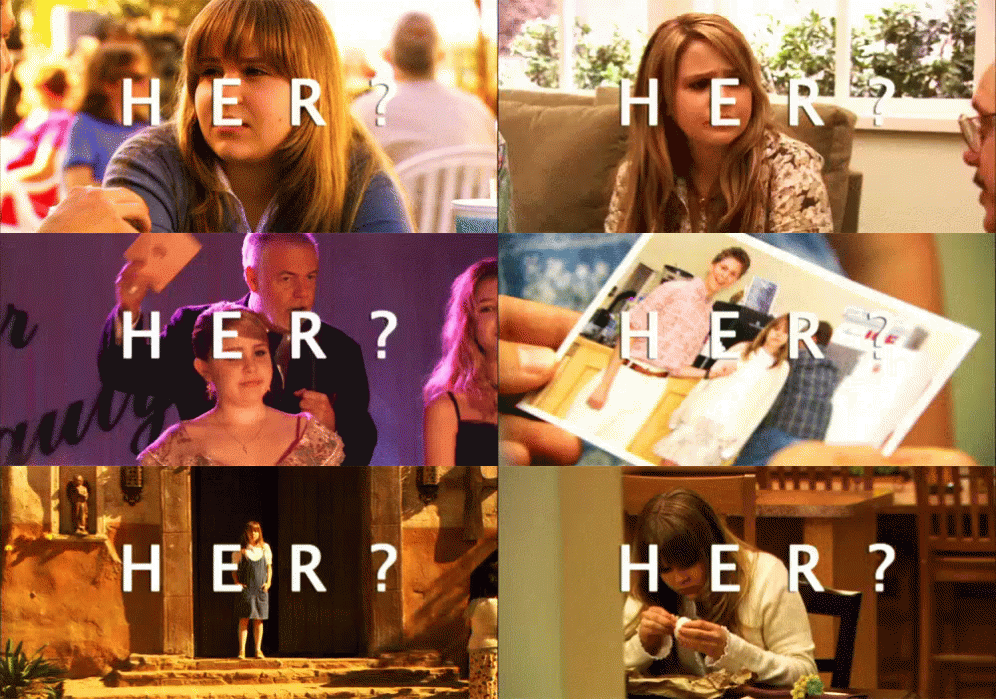
2) Bring me with you/Don't be a gatekeeper. Great, so you've noticed that women aren't invited. The next step is to invite them. No one in the progressive community (I hope) puts together any sort of conversation and thinks "let's not have any women/people of color/working class people/LGBTQ+ people etc there." What we do think is, "Who do I know? With whom am I comfortable? With whom do I already have a relationship?" And the problem is that the answer tends to be people who look and think like us. Even if it this weren't a scenario in which I should have already been invited by dint of my position (and I absolutely should have been and eventually was) it would behoove our movement in similar situations to actively seek out appropriate women to include. You may say "if a woman doesn't hold a position of power then why should I just bring one along?" To that I say, "why am I the only woman in a position important enough to (eventually) be included?" Part of the answer is that these are the rooms in which relationships are built and those relationships often put people in positions of power. So if you make an effort to insist on having a woman to the table, the next time we're asking the questions "Who do I know? With whom am I comfortable? With whom do I already have a relationship?" The answer will be "her." (No, not Egg.) Not only does diversity lead to better outcomess but it interupts a self-perpetuating cycle.
This is especially important in an industry where our currency is relationships. Sometimes we want to be the gatekeeper to powerful people or conversations because we think it makes us valuable. I would submit that preserving our privilege isn't the best way to build that currency. Instead being a connector is a wonderful way to build our personal power and improve our community. As I always say, this cycle you might be at a committee and I might be managing one of your races, but next cycle I'll be at that committee and you'll be a consultant wanting me to connect you to my races. So do what's good for you AND our community and make sure you are advocating to have women (and other traditionally marginalized people) at the table.
3) Speak respectfully, whether I'm in the room or not. I attended a gathering recently where a high-ranking official light-heartedly called someone "a pussy" then turned to me, the only woman in the room and apologized. There's a lot to unpack in that particular backpack but let's suffice it to say the following.
I have a zero tolerance policy for the word "pussy" on my campaigns and it's a policy I've had to enforce, a lot. Every time a male colleague refers to someone as a "pussy" I calmly and firmly interject, "we don't use that word on this campaign." (BTW I totally recommend adopting this.) My policy is not about cursing or even about off color jokes--I revel in both with great frequency and enthusiasm something I've had to keep an eye on as I've moved up the ranks-- but about the misogynistic root of the word itself. It's the same reason I had to side with Twitter about Samantha Bee calling Ivanka Trump a feckless cunt. I would never defend Ivanka Trump but when you use a gendered word like "cunt" or "pussy" to refer to someone in a derogatory fashion you reinforce the stereotype that women are weak or that our sexuality is dangerous. Whether you realize it or not you are essentially claiming your own power by reducing women to physical form or reproductive function. You are not insulting one woman (or man) in question, you are insulting ALL women. Moreover it is imperative that we never behave as if women's dignity and the moral high ground are at odds in zero sum game.
One joke or slip of the tongue isn't going the crumble empire but it does contribute to a toxic culture. So don't say something when I'm not there that for which you feel you'd have to apologize if I were. I love campaign people because we are smart, funny, and ambitious. Surely we can come up with some more creative curse words.
4) Don't go to strip clubs. I really wrestled over whether to include this one both because it seems so painfully obvious and because I don't want to give any ammunition to anyone who might use my words to defame Democratic campaigns. On the other hand...ayfkm?
Not too long ago, I wanted the phone number for a mid-ranking person in the Democratic infrastructure and I knew a colleague of mine had his number because that colleague had told me a story where he had lent this person money when they were at...a strip club. You know why I didn't have the guy's number? Because I sure as heck wasn't at a strip club. You see my issue here?
I don't want to give the impression that is a regular occurrence or the favored pastime of off duty operatives--if it ever was I think we've moved past that. But it happens enough that I could take my three best straight male friends in this industry and think of three separate unrelated incidents I could have used as the above example.
Look, this is not a point about the morality or feminism of strip clubs. I know there are arguments on both sides. But regardless of what side you fall on surely you can appreciate that this is not appropriate in a professional context. I know, and love, that the line between personal and professional is often blurred as we work long hours together in unfamiliar destinations. If you are at a bachelor party, gross in my opinion, but fine. If you are blowing off some steam with your new coworkers after going out on the road for GOTV...ask yourself who isn't there and why.
5) Validate my frustration. At its best working on campaigns can be absolutely exhilarating. At it's worst it can feel like having your soul slowly chipped away by an ice pick. You know what else is a lot like that? Being a woman. This work is hard. Life is hard. Being a woman is hard, especially in this industry, and especially now. I can't tell you how much means to me when I tell a male colleague a story like the ones above and they respond, without me have to prompt them, "that's not okay." By contrast of course, when male colleagues bend over backwards to deny the gendered aspects of an unpleasant work situation, it only compounds my frustration. There are a thousand little slights (some might call them "microaggressions") that come part and parcel with being a woman in a professional position of power and when we recognize them and call them out, that load gets a little lighter.
6) Understand that I'm doing this backwards in heels. The corollary to point 5 is that I'm asking you not to express your disappointment or displeasure with me when I don't handle an unfair situation the way you would or think that I should have. Please understand I've been socialized to be sensitive to the reactions my actions provoke and that those reactions are often different because I'm a woman. Where you might demand to be included in a meeting and be seen as sticking up for your candidate, I'm seen as egotistic and not being a team player. Where you might flat out reject someone's idea and be seen as decisive, I'm being a bitch. Speaking of socialization, the quiet but constant self-doubt I suffer as I struggle to balance when to push back against these norms versus when to suck it up for the sake of efficiency (even if that "efficiency" means placating egos for an extra 10 minutes in a situation where a man wouldn't have to) and the guilt and impotence I feel regardless of which path I choose is quite enough to drag me down all on their own.. Though your disappointment may be well-intentioned, please give me the benefit of the doubt that I thought of that, and keep it to yourself.
Writing this took it out of me but I have lot more to say on the subject. Shout out to all the badass men and women who make it a pleasure to do this job.
Campaign Love and Mine,
Nancy